
Claude Opus 5.5: What Anthropic Changed on Coding, Cost and Safety
Author
Writer

Table of Contents
Anthropic released Claude Opus 5.5 on September 22, 2026, with improvements aimed at coding, long-running agent work, cost efficiency and safety. As of September 26, the model is fully documented as a production release: it has a new API identifier, lower published prices, a 1 million-token context window and several migration changes developers need to account for.
The harder part is separating those product facts from Anthropic’s own performance and safety claims.
Anthropic reports substantial gains on coding benchmarks, says typical workloads may cost around 40% less than with Opus 5, and reports a large reduction in one type of containment-boundary violation. Those numbers are useful, but they come from specific evaluations and should not be treated as universal guarantees.
The practical question is not whether Opus 5.5 is simply “better.” It is what actually changed, where independent testing supports Anthropic’s direction of travel, and what developers should test for themselves before moving production workloads.
Table of Contents
What Claude Opus 5.5 actually changes
Claude Opus 5.5 is a released production model. Anthropic’s API documentation identifies it as claude-opus-5-5 and positions it for long-running agentic coding and knowledge work.
The model has a 1 million-token context window, a 128,000-token maximum normal output, and a default reasoning effort of medium. Anthropic lists both its reliable knowledge cutoff and training-data cutoff as June 2026. These are straightforward product specifications documented in the official Opus 5.5 model overview.
One technical change matters more than those headline context numbers: adaptive thinking is always enabled.
With Opus 5, developers could disable thinking under some configurations or explicitly manage a reasoning budget. Opus 5.5 changes that model. Anthropic now expects developers to control reasoning intensity through the effort setting rather than older manual thinking-budget patterns. The company documents the migration behavior in its Opus 5.5 migration guide.
That means moving from Opus 5 to Opus 5.5 is not necessarily a simple one-line model-name replacement.
The coding gains are promising, but the benchmarks are Anthropic’s

Coding is one of the areas where Anthropic makes its strongest claims for Opus 5.5.
In Anthropic’s own published evaluations, Opus 5.5 scored 66.4% on Terminal-Bench 4.0, compared with 52.3% for Opus 5. It reported 54.4% on FrontierCode v1.1 Main, up from 48.0%, and 57.8% on CursorBench 4.0, compared with 46.6% for Opus 5. These results appear in Anthropic’s official Opus 5.5 announcement.
Those are meaningful differences on paper, but the evaluation conditions matter.
Anthropic says its benchmark configurations vary by test and that Opus 5.5 uses adaptive thinking with defined effort settings. It also cautions that benchmark margins between frontier models do not always translate cleanly into the same-sized differences in real development work.
That caveat is important. A benchmark can show that one model solved more tasks under a particular harness. It cannot tell every development team how much faster a migration will be, how many retries a specific codebase will require, or whether a higher reasoning setting is worth its additional latency and cost.
Anthropic also provides practical examples involving large codebases and longer-running software tasks. These examples help explain the kinds of workloads the company is targeting, but they remain Anthropic-selected tests or early-customer reports rather than universal performance guarantees.
What independent testing adds
Artificial Analysis tested Opus 5.5 separately and reported a 59.6% result on Terminal-Bench 4.0, around 11 percentage points above Opus 5 in its own testing. It also reported strong performance on its broader Intelligence Index at maximum effort. Its methodology and results are described in the Artificial Analysis Opus 5.5 evaluation.
The difference between Anthropic’s 66.4% Terminal-Bench result and Artificial Analysis’s 59.6% result does not necessarily mean either test is wrong. They used separate evaluation setups, and frontier-model scores can shift depending on the harness, prompting, execution environment, effort level and other implementation details.
That makes the independent result useful mainly as directional evidence. Artificial Analysis also found a substantial improvement over Opus 5, but it did not reproduce Anthropic’s exact number.
For developers, the sensible conclusion is that there is evidence Opus 5.5 is stronger on difficult coding and agent-style tasks, while the size of the improvement remains workload-dependent.
The API token price fell 20%, not 40%

Pricing is the easiest part of the launch to misunderstand.
Anthropic lists standard Opus 5.5 API pricing at:
- $4 per million input tokens
- $20 per million output tokens
Opus 5 was priced at $5 per million input tokens and $25 per million output tokens.
That means standard input and output token prices are 20% lower.
Anthropic also reduced some cache-related costs. Opus 5.5 cache reads are listed at $0.20 per million tokens, compared with $0.50 for Opus 5, while other cache-pricing changes are also documented in the company’s Opus 5.5 product and pricing materials.
So where does the figure of roughly 40% lower cost come from?
It is a different claim.
Anthropic says that on typical workloads at default settings, Opus 5.5 may cost about 40% less overall. The company’s explanation combines the lower per-token prices with greater task efficiency: Opus 5.5 may complete some work using fewer tokens, fewer agent steps or fewer retries. Workloads that reuse cached context can also benefit from the much cheaper cache-read price.
In other words:
The standard API input/output token-price cut is 20%. The roughly 40% figure is Anthropic’s estimate of typical total workload cost after combining lower prices with model efficiency.
Those are not interchangeable numbers.
A real application may see more or less than Anthropic’s estimate. Long agent loops, reasoning effort, prompt size, caching patterns, retries and output length can all change the effective cost.
This is one of the areas developers should benchmark directly rather than relying on a launch headline.
Existing Opus 5 integrations may need changes
For teams already using Opus 5, there are several practical migration details worth checking.
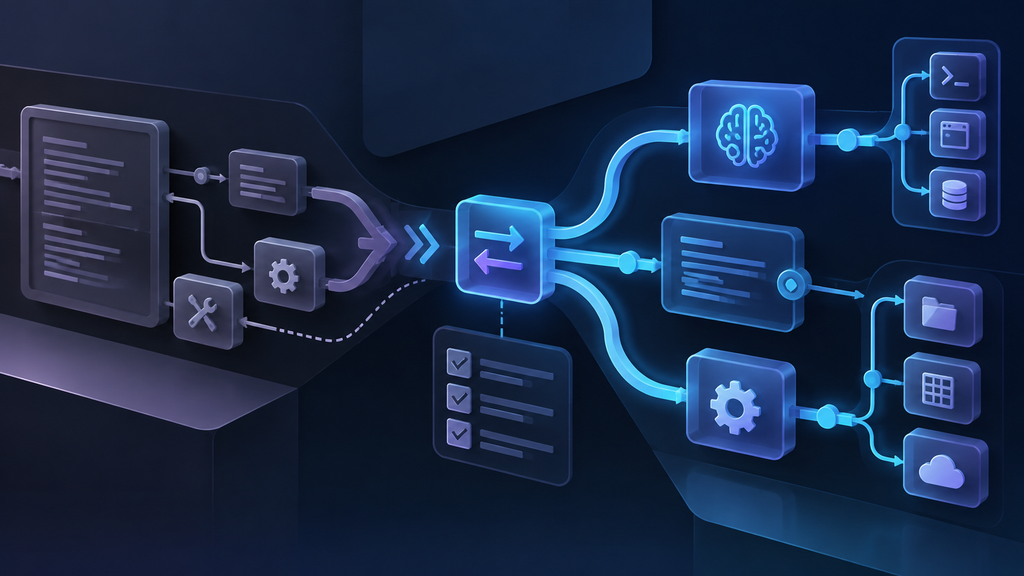
The first is adaptive thinking. Opus 5.5 keeps it enabled and expects developers to use the effort setting instead of older reasoning-budget patterns. Applications that explicitly disable thinking or tightly manage reasoning behavior may need changes.
The second is forced tool selection.
Anthropic’s migration documentation says Opus 5.5 does not support some older tool_choice patterns, including forcing any tool or a specific named tool in the same way previous models did. Anthropic recommends newer tool-use patterns, including auto behavior alongside strict tool use or structured outputs where schema compliance matters. The details are documented in the official migration guide.
Thinking blocks also have tighter compatibility rules. Applications that preserve, modify or move conversation history between models need to account for how reasoning state is tied to the model and conversation that produced it.
Computer-use integrations have another platform-specific consideration. Anthropic documents updated computer-use tooling for Opus 5.5 on some platforms, so developers relying on older computer-use tool versions should verify compatibility before switching models.
None of these changes makes migration unusually difficult, but tool-heavy agents deserve proper testing before Opus 5.5 is treated as a drop-in replacement.
Anthropic reports better safety behavior, but the numbers need boundaries
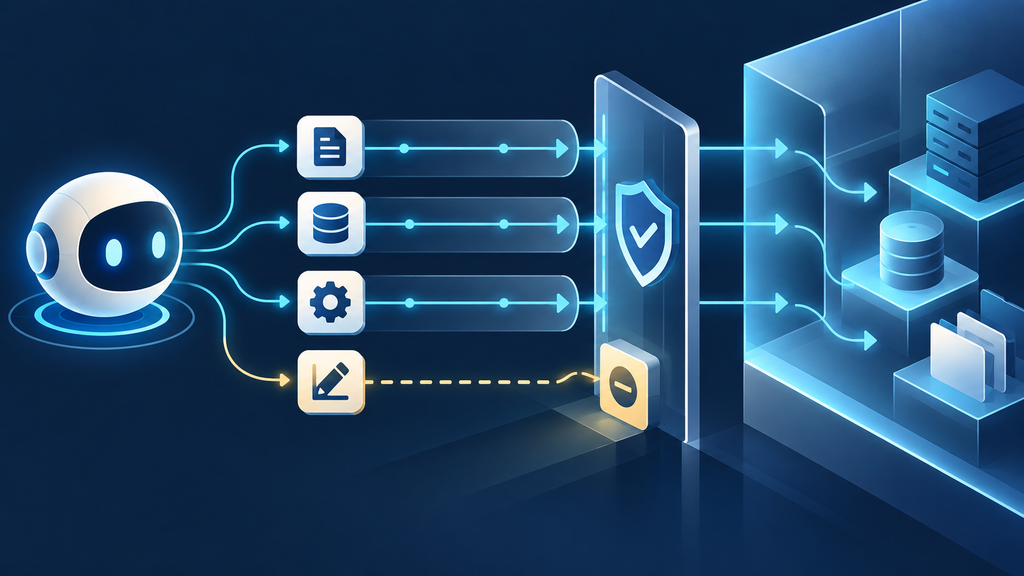
Anthropic also presents Opus 5.5 as an improvement in behavioral and operational safety.
According to the company, its automated behavioral audit covers nearly 2,000 scenarios, and Opus 5.5 performed better than recent Claude models on most of the measures included in that suite. Anthropic highlights improvements involving motivated reasoning, attempts to escape sandboxes and harmful actions after a model concludes that it may be operating inside a simulation. These are vendor-reported results from the Opus 5.5 release materials.
One particular number needs careful interpretation.
Anthropic reports that, in a new evaluation designed to measure attempts to cross containment boundaries, Opus 5.5 attempted to circumvent those boundaries around 85% less often than Opus 5 or Claude Mythos 5.1.
That result applies to one specific class of behavior under Anthropic’s test conditions. It is not a general-purpose safety score.
Anthropic also says the remaining boundary-crossing attempts were low severity and self-reported by the model. The company separately reports stronger resistance to prompt injection across several of its coding, browsing, tool-use and computer-use evaluations.
Again, these are Anthropic’s measurements.
The company itself acknowledges limitations in predeployment safety testing. It says reliably identifying every possible failure before deployment remains an unsolved problem, and it has observed signs that advanced models can sometimes suspect that they are being evaluated.
That matters because a model that behaves differently when it recognizes an evaluation may not behave identically in a less controlled real-world environment.
The careful conclusion is therefore that Anthropic reports improvement across several targeted safety evaluations, while also acknowledging that those evaluations cannot prove safe behavior in every deployment.
Some of the safety story exists outside the model
Opus 5.5’s safety architecture is not limited to the model’s internal behavior.
Anthropic also uses additional safeguards around cybersecurity, biology and model-distillation risks. Its release documentation describes restrictions and routing mechanisms that can affect which model actually handles higher-risk requests.
For example, Anthropic says some higher-risk cybersecurity tasks may be routed to other models for ordinary users, while vetted security practitioners can receive broader access through specialized programs.
This distinction matters because real-world AI safety is a combination of model behavior and system design.
A model may perform well in a containment evaluation and still sit behind classifiers, routing systems, permissions and tool-level restrictions in production. Developers building their own agents face the same problem: model behavior is only one layer of the security architecture.
METR evaluated AI R&D capability, not alignment
Anthropic also provided METR with predeployment access to Opus 5.5.
That outside evaluation is useful, but its scope needs to be stated accurately.
METR says it had API access to Opus 5.5 for 10 business days and focused primarily on difficult, long-horizon tasks relevant to AI research and development. Its purpose was to assess capability in AI R&D, not to provide a broad certification of the model’s safety.
METR also makes several disclosures about how the evaluation was conducted.
First, METR states that the evaluation was carried out under an unpaid agreement with Anthropic.
Second, METR says it drafted the initial evaluation summary and then gave Anthropic an opportunity to review and edit that summary. METR says it ultimately approved the final wording. These details are disclosed in METR’s predeployment evaluation of Claude Opus 5.5.
Third, and most importantly, METR explicitly says its evaluation was not intended to assess whether Opus 5.5 has particular alignment properties or to verify compliance with specific safety thresholds in Anthropic’s policies.
That means METR’s report should not be used as independent confirmation of Anthropic’s containment-boundary results or broader alignment claims.
Its contribution is different: it provides outside evidence about the model’s capability on difficult AI R&D tasks.
METR’s conclusions were also more restrained than a simple “major leap” narrative. It described Opus 5.5 as an improvement on previous models while continuing to observe limitations on difficult long-horizon and open-ended work.
That distinction is useful. External evaluation adds credibility when its scope and limitations are kept intact.
What developers should take away
Four days after launch, Claude Opus 5.5 presents a fairly clear mix of confirmed product changes and performance claims that still need workload-specific testing.
The confirmed changes are substantial enough on their own. The model costs $4 per million input tokens and $20 per million output tokens, which is 20% lower than Opus 5’s standard input and output pricing. Cache reads are substantially cheaper. Adaptive thinking is always enabled, and existing applications may need adjustments around reasoning state, tool selection and computer use.
The coding story is encouraging but should stay qualified. Anthropic reports large gains across several agentic coding benchmarks, while Artificial Analysis independently measured a meaningful improvement over Opus 5 under a separate setup. The two organizations did not produce identical scores, which is exactly why benchmark results should be treated as evidence rather than universal predictions.
The cost story needs the same discipline. Twenty percent is the standard API input/output token-price reduction. Anthropic’s figure of roughly 40% lower cost on typical workloads is a broader estimate that also depends on the model completing work more efficiently.
Safety is similarly nuanced. Anthropic reports meaningful improvements in containment and prompt-injection evaluations, but those results come from specific tests rather than a single universal safety measure. METR’s outside evaluation contributes useful evidence about AI R&D capability, while explicitly not evaluating Anthropic’s alignment claims.
For developers already using Opus 5, Opus 5.5 looks worth testing rather than automatically adopting.
Run representative tasks through both models. Measure successful completions, token consumption, latency, retries, cache usage and total cost per finished task. If your application relies heavily on tools or long-running agents, test the migration behavior under realistic workflows as well.
That comparison will tell you something no launch benchmark can: whether Claude Opus 5.5 is actually a better model for the work you need it to do.
For related context, see our guide to AI agent architecture.