
Jack Smith Senate Hearing: Why the Former Special Counsel Is Trending Again
Author
Writer
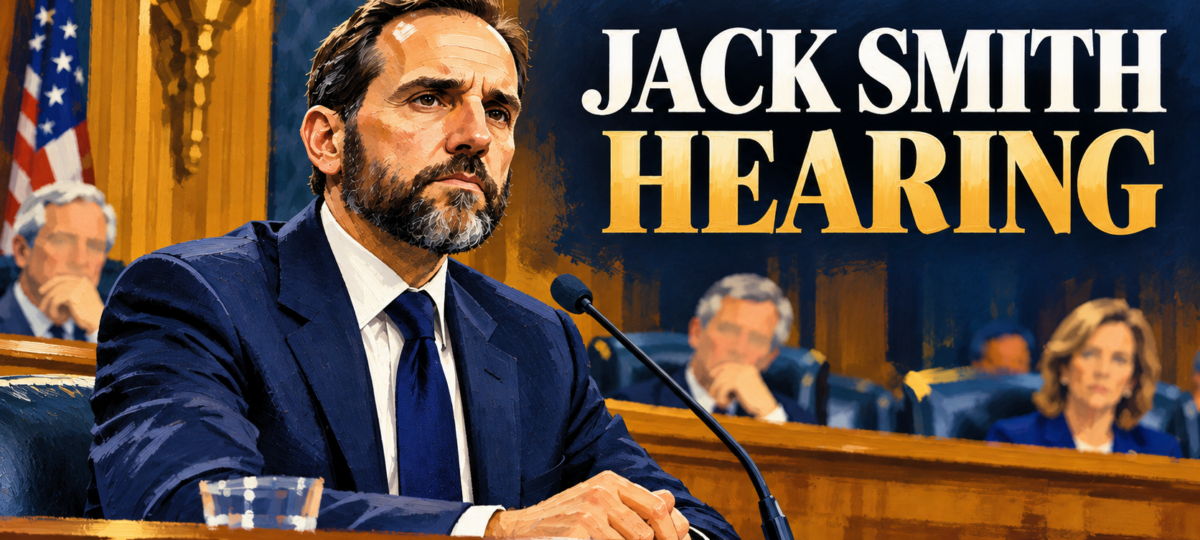
Table of Contents
Table of Contents
Jack Smith is back at the center of U.S. political attention after a tense Senate Judiciary Committee hearing that revisited his investigations of President Donald Trump, the tactics his team used, and the legal and political fallout that has followed him since the federal cases ended.
Search interest around Smith surged sharply after the hearing, with Google Trends showing “Jack Smith” up more than 1,000% in the U.S. and still marked active.
The reason is not one single revelation.
It is the combination of several things happening at once: Smith publicly defending his decision to prosecute Trump, Republican senators accusing him of abusing his authority, renewed scrutiny over phone records obtained during his investigation, and one awkward basketball-related exchange that quickly caught the public’s attention.
That mix made the hearing easy to reduce to clips.
The actual story is more complicated.
Smith still stands by the investigations he led. Republicans continue to argue that those investigations crossed important legal and institutional boundaries. Democrats argue that the criticism is largely an attempt to discredit legitimate prosecutions.
And underneath all of that is a broader question that Congress still has not resolved: where should the line be drawn when a federal investigation touches elected officials, political organizations, donors and journalists?
Why Jack Smith Is Trending Now
On September 29, 2026, former special counsel Jack Smith appeared before the Senate Judiciary Committee for a hearing focused on his investigations into Trump and allegations that his office improperly targeted Republican lawmakers and organizations. AP News
Smith led two federal criminal cases involving Trump: one related to alleged efforts to overturn the 2020 election result, and another involving Trump’s retention of classified documents after leaving office. After Trump won the 2024 election, Smith ended the federal prosecutions, citing Justice Department policy against indicting or prosecuting a sitting president. AP News
The hearing gave Republicans a forum to revisit their criticisms of Smith’s work and gave Smith a chance to defend it publicly.
Committee Chairman Chuck Grassley said Smith’s operation had been politically motivated and had improperly swept up information tied to Republican lawmakers, donors and organizations. Smith rejected that characterization and said his investigations followed Justice Department policy rather than partisan considerations. AP News
That disagreement shaped almost the entire hearing.
What the Senate Hearing Was About
The hearing was formally titled “Oversight of Jack Smith’s Abuse of Authority and the Targeting of Republicans and Related Matters,” reflecting the framing of the Republican-led Judiciary Committee. Senate Judiciary Committee
Republican senators questioned Smith about the scope of his investigations, the collection of records tied to members of Congress, financial information involving Republican donors, and communications involving journalists.
Smith, meanwhile, defended his decisions and argued that investigators followed evidence relevant to the cases they were assigned to pursue. AP reported that he said politics did not influence his prosecutorial decisions. AP News
Democratic senators took a very different view of the hearing.
They argued that the focus on Smith’s investigative methods was distracting from the conduct his office had originally investigated. AP reported that Democrats repeatedly defended the legal basis of Smith’s work while Republicans framed the same actions as evidence of prosecutorial overreach. AP News
That divide is important because many claims made during the hearing were political allegations, not judicial findings.
Why Republicans Focused on Phone Records
One of the most substantive parts of the hearing concerned phone records obtained by Smith’s team.
Investigators had subpoenaed what are known as toll records from several Republican lawmakers. These records can show when a call occurred, how long it lasted and which numbers were connected, but they do not contain the actual content of the conversation. AP News
Republican senators argued that secretly obtaining those records was an improper intrusion into congressional activity.
Ted Cruz, whose records were among those sought, questioned Smith over why affected lawmakers were not notified. Smith responded that investigators had reason to believe disclosure could create a risk that evidence would be destroyed or that the investigation could be obstructed. AP News
Smith also said the records were relevant because investigators had evidence that Trump and associates were contacting senators on January 6, 2021, while Congress was preparing to certify the election result. According to Smith, investigators wanted to understand whether those contacts were connected to efforts to delay certification. AP News
The central dispute is less about what toll records contain than whether the subpoenas’ scope, secrecy and justification were appropriate in a politically sensitive investigation. Reuters
That distinction matters.
How Jack Smith Defended His Investigations
Smith did not distance himself from the decisions his office made.
He told senators that he stood by his work and rejected the argument that Trump had been prosecuted because of his political identity. AP reported that Smith said the decision to prosecute was his and that he did not allow politics to determine investigative or charging decisions. AP News
Smith also defended obtaining records from lawmakers as part of the investigation into events surrounding January 6.
His argument was essentially that investigators were following evidence linked to communications between Trump, his associates and members of Congress rather than investigating lawmakers simply because they were Republicans. AP News
Republican lawmakers strongly rejected that explanation.
Grassley accused Smith’s team of conducting a wider effort that swept up information involving Republican organizations, donors and political figures. The committee has also published records it says show Smith’s investigation collected financial and communications information extending beyond Trump himself. Those claims remain part of congressional oversight and political dispute, rather than findings from a criminal case against Smith. Reuters
As of September 30, 2026, no charges had been filed against Smith. Republican lawmakers have called for investigations and possible prosecution, while Smith and his lawyers dispute allegations that he acted improperly. Reuters
What Happened to the Trump Cases
Smith was appointed special counsel in 2022 by then-Attorney General Merrick Garland.
His office later brought two federal cases against Trump.
One centered on alleged attempts to interfere with the transfer of presidential power following the 2020 election.
The second accused Trump of improperly retaining classified documents after leaving the White House and obstructing efforts to recover them. AP News
Neither case ultimately went to trial.
After Trump won the 2024 election, Smith moved to end the federal prosecutions because longstanding Justice Department legal opinions hold that a sitting president cannot be federally indicted or prosecuted. AP News
That outcome is one reason the arguments around Smith remain unusually unresolved.
The cases did not end with trial verdicts determining whether the allegations were proved or disproved.
Instead, they ended because Trump returned to office.
As a result, both sides continue to point to different parts of the record.
Smith says his team had sufficient evidence to justify the prosecutions.
Trump and his Republican allies have consistently rejected the prosecutions as politically motivated and improper. AP News
The absence of trials means those competing claims were never fully tested before juries in the two federal cases.
The Basketball Mix-Up That Went Viral
For many people who encountered the hearing through social media, the most memorable moment had almost nothing to do with the legal questions.
Republican Sen. Eric Schmitt questioned Smith about whether he had attended an Atlanta Hawks game in February 2024.
Schmitt suggested that Smith’s presence in Atlanta could have raised questions about a possible connection with Fulton County District Attorney Fani Willis, who was separately prosecuting Trump in Georgia. AP News
Smith denied attending an Atlanta Hawks game.
Then the confusion became clear.
Smith said he had attended a different basketball game that month: a University of Iowa women’s game at the University of Maryland featuring the Iowa Hawkeyes and Caitlin Clark.
The apparent mix-up was between the Atlanta Hawks and the Iowa Hawkeyes. AP News
Democratic Sen. Amy Klobuchar highlighted the naming confusion during the hearing after Schmitt had suggested Smith may have lied.
The exchange became a widely shared moment from the hearing, which the Associated Press covered separately.
The moment was dramatic, but it should not overshadow the more consequential questions raised during the rest of the hearing.
What the Hearing Actually Clarified
The hearing did not suddenly settle the debate over Jack Smith.
It clarified where the disagreement now stands.
Republicans argue that Smith used an investigation of Trump to collect information far too broadly across Republican political networks and members of Congress.
Smith argues that his team pursued relevant evidence, followed Justice Department procedures and did not make charging decisions based on political affiliation. AP News
Democrats largely defended the investigations while also acknowledging that congressional records deserve careful handling. AP reported that the committee’s ranking Democrat, Dick Durbin, said there was legitimate concern about investigative activity touching Congress even as he rejected the broader Republican case against Smith. AP News
That nuance is useful.
It is possible to debate how aggressive an investigation should be without automatically concluding that every investigative action was politically motivated.
It is also possible to defend the legal basis for an investigation while still asking whether particular subpoenas or secrecy measures went too far.
Those are separate questions.
Much of the hearing treated them as one.
What Remains Unresolved
Several important questions remain open after Smith’s testimony.
Congress continues to examine exactly how broad the investigations became and what information was collected.
Republican lawmakers continue to argue that Smith should face consequences for what they describe as abuses of prosecutorial power. Smith and his lawyers dispute allegations that he misled Congress or acted improperly. AP News
The political dispute is likely to continue because the underlying federal Trump cases ended before trial.
There is no jury verdict from either case providing a final resolution of the criminal allegations.
There is also no criminal judgment establishing that Smith committed wrongdoing in conducting the investigations.
That leaves the public with something less satisfying than a clean legal conclusion: competing interpretations of an investigation that became entangled with a presidential election and ended when the defendant returned to the White House.
Conclusion
The reason Jack Smith is trending again is not simply that he returned to Capitol Hill.
The September 29 Senate hearing reopened one of the most politically charged legal disputes of the past several years.
Smith defended the Trump prosecutions and the investigative decisions behind them. Republican senators accused him of overreach and political targeting. Democrats pushed back against those accusations. And a mistaken basketball reference created a viral moment that brought even more attention to the hearing. AP News
The most important questions, however, are larger than that viral exchange.
How far should federal investigators be able to go when evidence leads toward members of Congress?
What safeguards should apply when politically sensitive records are obtained secretly?
And how should the public evaluate prosecutions that ended before the allegations were tested at trial?
Those questions remain unsettled.
That is why the Jack Smith story has not really gone away.
The hearing simply brought it back into public view.
Sources: Google Trends, Associated Press coverage of the hearing, Reuters coverage of Smith’s testimony, AP coverage of the basketball exchange, and the U.S. Senate Judiciary Committee hearing record.
Explore more in our U.S. politics coverage.